


For years, I’ve watched gardeners on YouTube start seeds in just about every way imaginable.
Some use soil blocks. Some directly sow into the garden. Others start seeds in tidy little six-packs, one seed carefully placed into each cell. There are reusable trays, peat pellets, egg cartons, and every other method you can think of.
Over time, I’ve tried a lot of them.
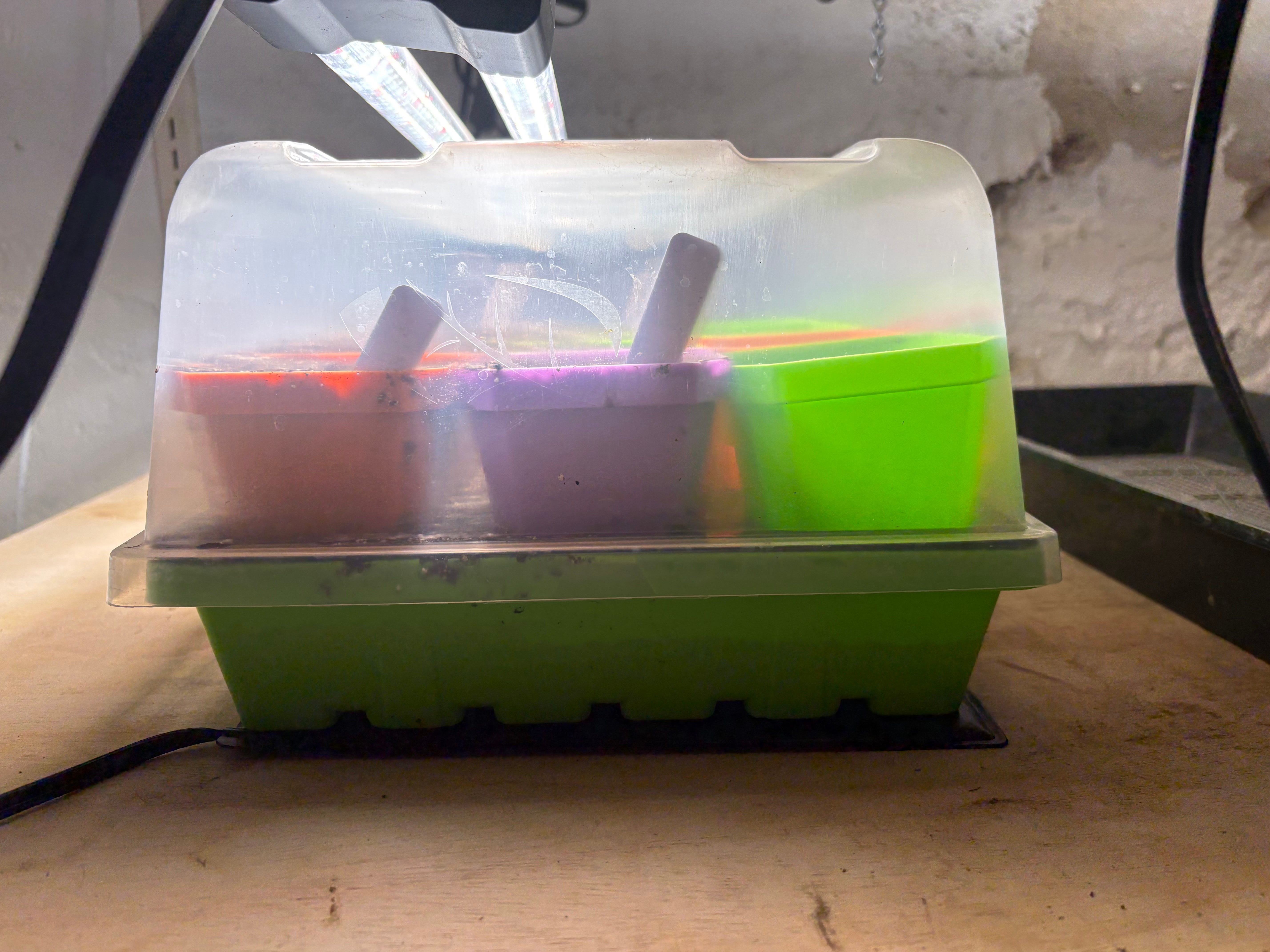
I experimented with the pre-made moss pellets. I tried starting seeds in egg cartons. I played around with different trays and containers. Eventually I settled on what worked best for my basement setup: sturdy seed trays and six-pack inserts. I use the ones from Bootstrap Farmer, mostly because they’re durable and the colors make my grow setup feel a little more cheerful during the long indoor seed-starting season.
My usual method has been pretty straightforward. One seed per cell. Once the seedlings grow large enough, I pot them up into bigger containers.
It’s a reliable system. Germination is usually good, and it produces healthy plants.
But this year I decided to break my own rules.
Part of the inspiration came from a gardener I’ve followed for years, a YouTuber named Jessica Sowards from Roots and Refuge Farm. Her approach is a little different. Instead of placing one seed per tiny cell, she often starts seeds in larger pots and sprinkles multiple seeds together in the same container. Later, she separates them out once they’ve grown a bit.
It’s a method I’ve watched for years but never really tried.
Then my broccoli and cauliflower had a rough start this season.
They became leggy under the humidity dome and lights, and my attempts to rescue them after potting them up didn’t go particularly well. Watching them struggle made me pause and wonder if part of the problem might actually be my system.
That’s when curiosity kicked in.
Yesterday I started a small experiment.
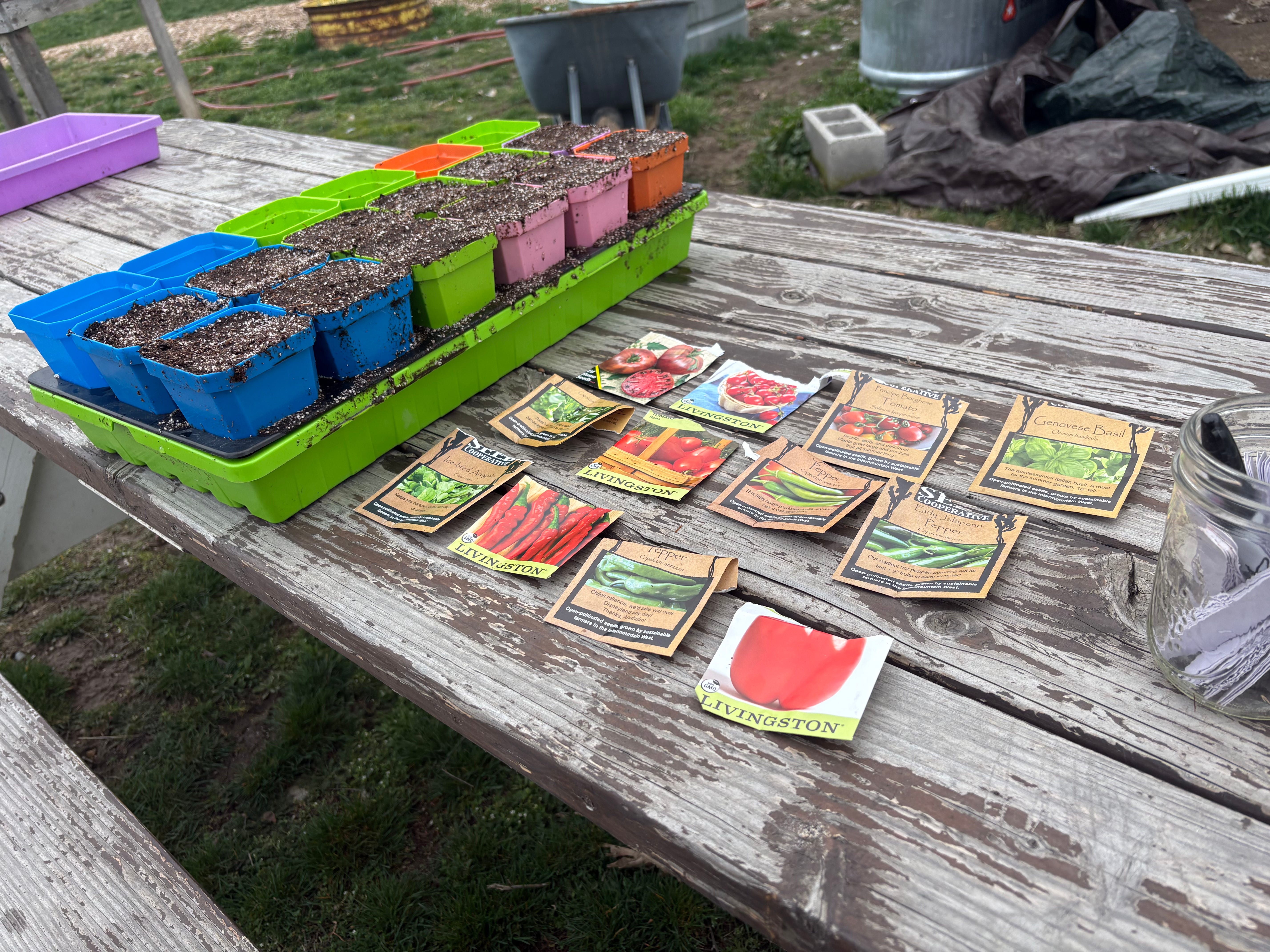
Instead of the usual six-pack cells, I used larger four-inch pots. Into each pot, I planted somewhere between nine and twelve seeds. For the smaller seeds, I simply sprinkled them across the surface and pressed them lightly into the soil. For the larger seeds, I spaced them out a bit more intentionally.
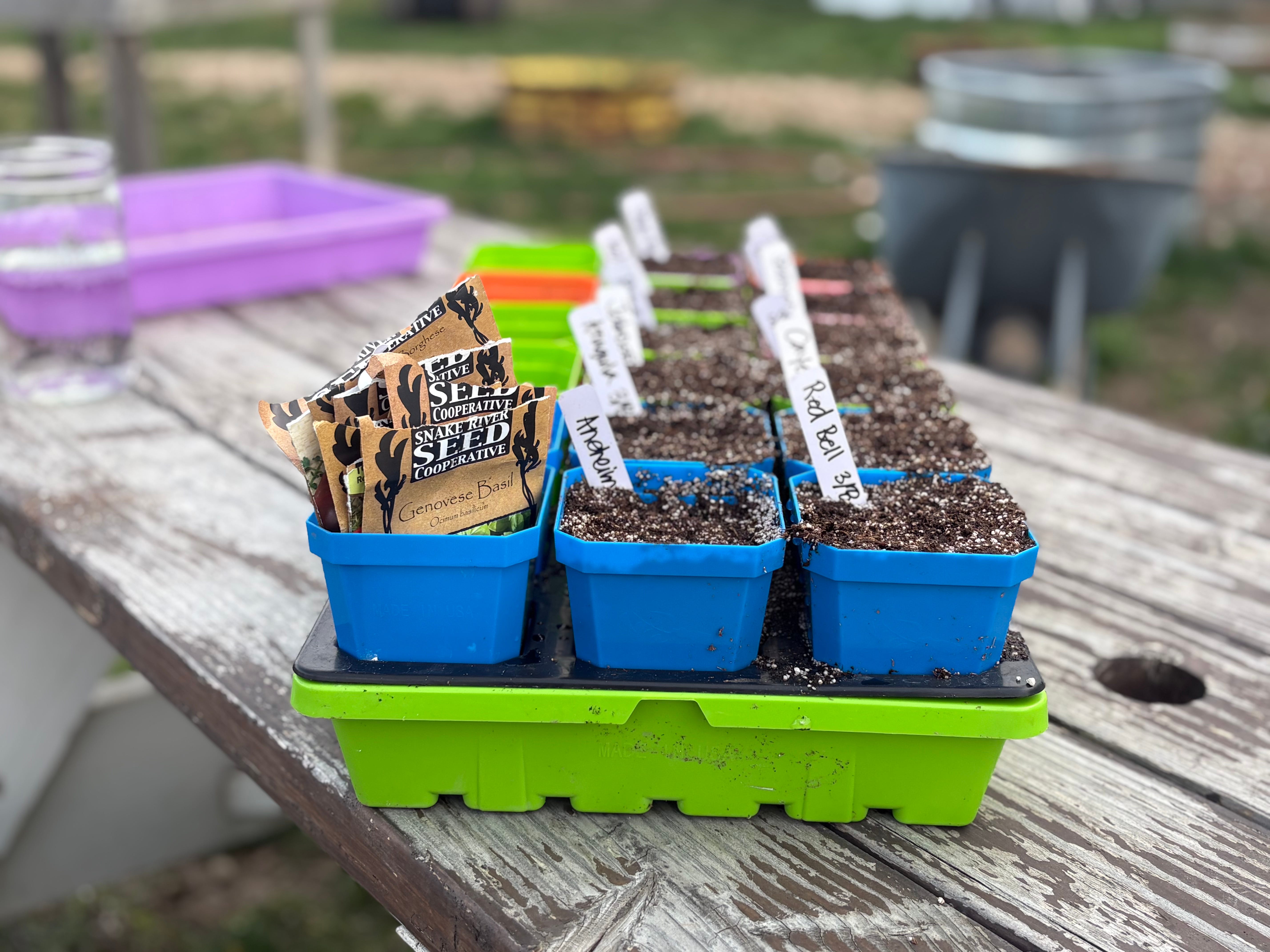
The idea is simple. I’ll allow the strongest seedlings to emerge and then thin them later, keeping the healthiest plants and removing the weaker ones.
There are a few reasons this method might work better.
For one, it could reduce transplant shock. Looking back, I suspect I may have moved my broccoli and cauliflower seedlings too early during their first round this year. Starting them in a larger container from the beginning might give them a stronger start before they ever need to move.
I’m also curious whether the seedlings will grow sturdier in the larger pots. Will the roots develop better? Will the plants be easier to handle when it’s time to separate them?
And if this works, it might help me skip one of the most tedious parts of seed starting: potting up.
At this stage of life, time matters. I have a small person crawling around the house now, and gardening has to fit into shorter pockets of the day than it used to. If a different method can produce strong plants while saving me a step, that’s a win.
But the truth about gardening experiments is that nothing is ever perfectly predictable.
Every gardener develops their own techniques over time. What works beautifully in one garden may completely fail in another. Soil is different. Light is different. Weather is different.
That’s part of what makes gardening so interesting.
Each season offers another chance to test something new.
Curiosity is one of the best tools a gardener has. You try something different not because you know it will work, but because you want to see what happens.
And sometimes those small experiments lead to the techniques you end up using for years.
As this experiment unfolds, I’ll report back on a few things: the germination rate, how sturdy the seedlings become, and whether this method actually makes transplanting easier later on.
Most importantly, I’ll see if it’s a technique worth repeating next season.
In the meantime, I encourage you to run your own small experiments in the garden.
Ask yourself: what “rules” have you followed simply because that’s how it’s always been done?
And what might happen if you tried breaking one of them?
Ashley