


Earlier this spring I walked out to check one of my old metal tub planters and noticed something familiar on one side and something completely confusing on the other.
On one half of the planter, everything looked exactly as expected. My hyssop plant, now in its third year, was beginning to wake up again. The stems were pushing out fresh green growth, just like they have every spring since I planted it.
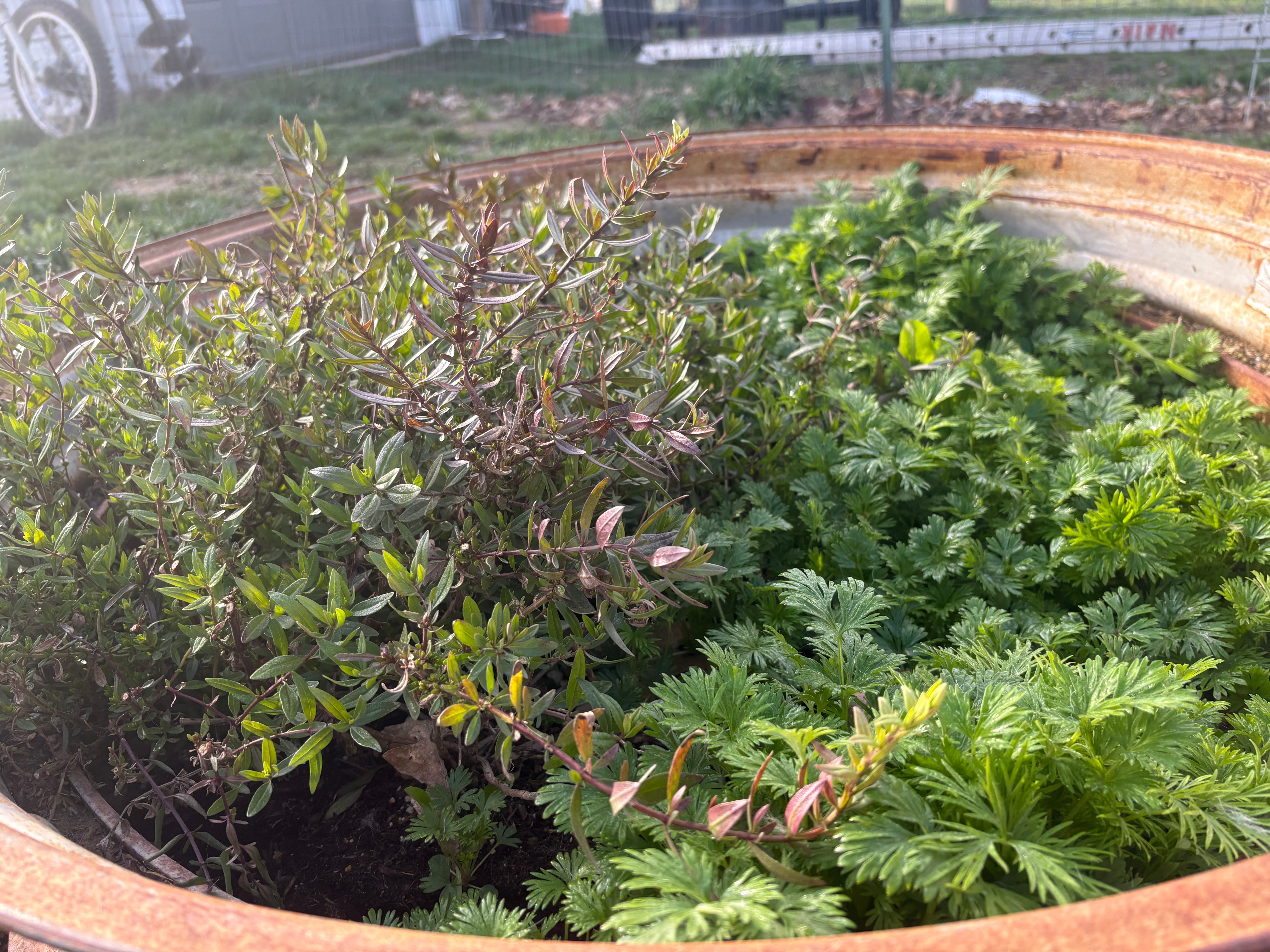
But the other half of the planter was a completely different story.
A thick patch of green had started filling in, and I had no idea what it was.
At first I assumed it was just more hyssop emerging. But as the days went by and the plants got larger, I started noticing that something didn’t quite add up. The color wasn’t quite the same. The leaves were shaped differently. The overall growth habit looked nothing like the hyssop next to it.
And that’s when I realized I might have a little garden mystery on my hands.
I don’t think I planted anything there last fall. But with the kind of gardener I am, it’s hard to say for sure.
Last autumn, when I was trimming the dried seed heads off the hyssop flowers, I remember taking the little handful of seeds and sprinkling them over the empty side of the planter. My thinking at the time was simple enough. If a little hyssop was good, a whole tub of hyssop would be even better.
So I scattered the seeds across the soil and left it at that.
There was no labeling. No careful spacing. No real planning at all. Just a quick moment of curiosity and a casual handful of seeds tossed into the dirt.
Now that spring has arrived, that casual decision has turned into a puzzle.
The plants that have emerged are thick and healthy, but they don’t look like hyssop. They could be weeds, although they don’t quite look like the usual weeds that pop up around here. Out of curiosity, I did a quick search online, and one suggestion said they might be carnations.
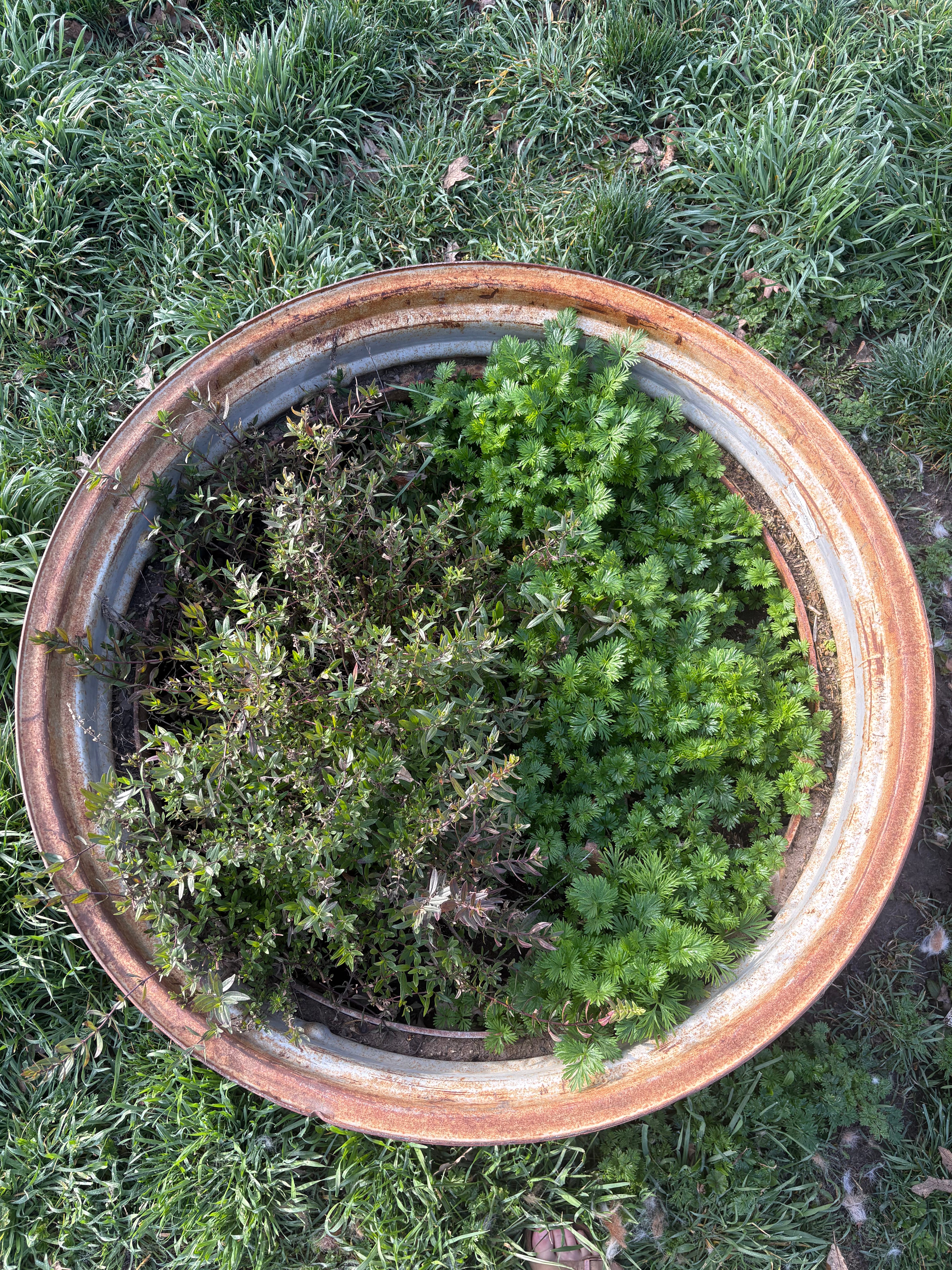
That seems unlikely, considering I’ve never planted carnations in that planter before (or ever).
Which leaves me with the simplest explanation, I have no idea what’s growing there.
This kind of thing actually happens more often in gardens than we like to admit. Seeds move around. Birds drop them. Squirrels bury them. Dogs dig through beds and carry things from one part of the yard to another.
Sometimes seeds from last year reappear where you least expect them. Other times you forget what you planted entirely.
Gardens have a way of rearranging our plans, and honestly, that’s part of the fun.
Right now the planter has become a small mystery garden. Maybe I sprinkled something else there without remembering. Maybe another plant reseeded itself. Maybe it’s simply a stage of hyssop growth that I’ve never noticed before.
Whatever it is, I’ve decided not to rush the answer.
Instead of digging anything out or trying too hard to identify it right away, I’m going to let the garden reveal the answer in its own time. I’ll watch how the leaves change. I’ll see if the plants eventually flower. Maybe the scent or the blooms will finally give it away.
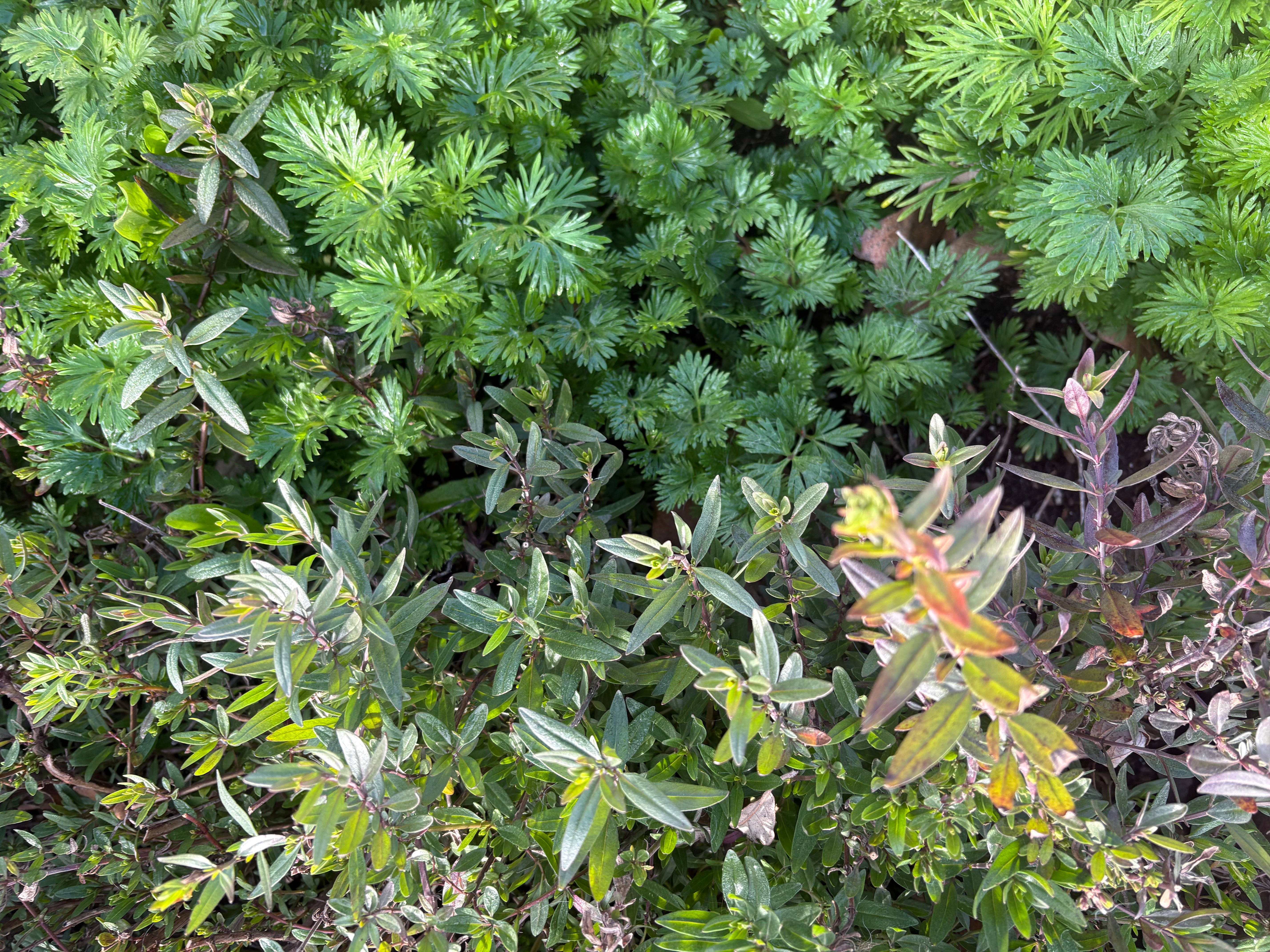
Eventually the plants will tell me what they are.
Not every garden experiment is carefully planned. Sometimes experiments start with spreadsheets and seed trays and neat rows. Other times they start with a handful of seeds tossed casually into a planter.
Sometimes those seeds grow into something wonderful.
Other times nothing comes of it at all.
And sometimes, like this little metal tub in my yard, the garden answers with something unexpected.
Curiosity in the garden often looks like sprinkling seeds and waiting to see what happens.
Ashley