


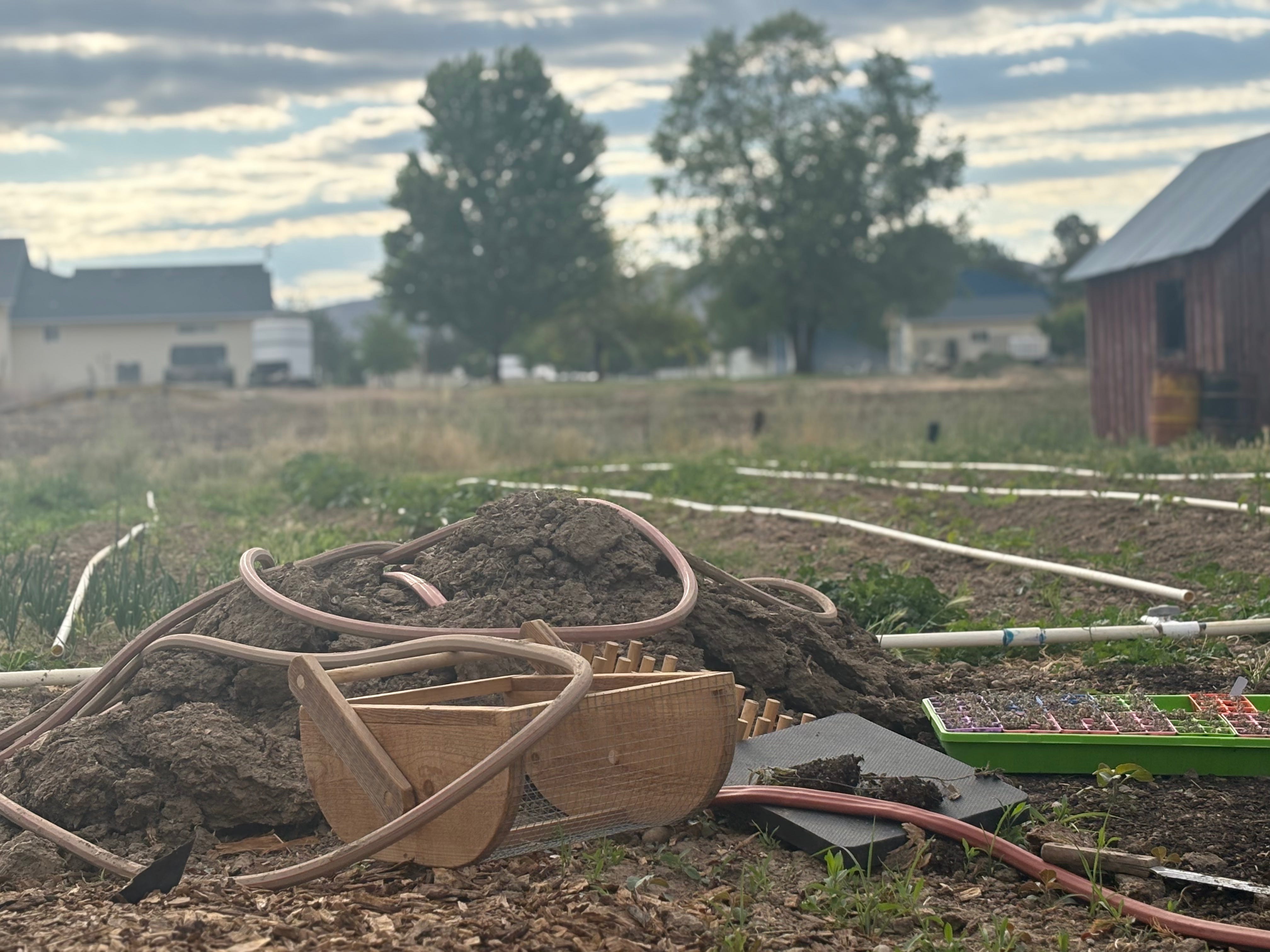
There’s a point in the growing season where the garden stops feeling like a hobby and starts feeling oddly personal. You walk outside intending to check on tomatoes or pull a few weeds, and somehow you end up confronting yourself instead.
A neglected corner flourishes anyway. Something you babied from seed struggles no matter what you do. The rows you imagined perfectly in March look completely different by May. And somewhere in the middle of all of it, the garden begins reflecting back the parts of your life you’ve been too busy to notice.
I think that’s why gardening affects people so deeply. It’s never really just about plants.
The garden has a way of exposing our expectations. It shows us how badly we want control, how uncomfortable we are with uncertainty, and how difficult it can be to accept that timing matters more than force. You can prepare the soil beautifully, research everything correctly, and still lose plants to weather, pests, or simple bad luck. At some point, every gardener has to make peace with the fact that effort and outcome are not always directly connected.
That lesson feels especially relevant in life right now.
So many of us are carrying invisible pressure to constantly produce, improve, optimize, and bloom. We treat ourselves like machines instead of living things. We expect growth without rest. We expect beauty without failure. We expect ourselves to keep performing through exhaustion and then feel ashamed when we can’t.
But gardens don’t work that way.
Healthy gardens have seasons of abundance, but they also have seasons of recovery. Soil sometimes needs to rest. Perennials disappear completely before returning stronger. Some years are wildly productive, and other years are humbling. None of this means the garden is failing. It means the garden is alive.
I’ve noticed that my garden almost always reflects the state of my inner life before I consciously recognize it myself. In overwhelmed seasons, things become chaotic outside before I fully admit how stretched thin I feel internally. During hopeful seasons, I suddenly find myself planting again, dreaming again, rearranging spaces, making room for possibility.
The garden tells the truth gently, but it does tell the truth.
And unlike so much of modern life, it doesn’t care about appearances. Plants are unimpressed by productivity culture. They respond to consistency, observation, patience, and attention. They remind us that growth is usually slower than we want it to be and far less linear.
I think many people return to gardening after difficult chapters for this exact reason. Not because it fixes everything, but because it reconnects them to something honest. Something cyclical. Something grounded in reality instead of performance.
The older I get, the less interested I am in perfect gardens. I’m more interested in lived-in ones. Gardens that tell the truth about the people caring for them. Gardens that evolve. Gardens with experiments, failures, surprises, and resilience woven into them.
Maybe that’s true for people too.
Maybe a meaningful life doesn’t look perfectly curated from season to season. Maybe it looks responsive. Maybe it looks like learning when to push and when to rest. Maybe it looks like understanding that dormant seasons are not wasted seasons.
Some things are still growing underground long before they become visible.
What has your garden been reflecting back to you lately?